
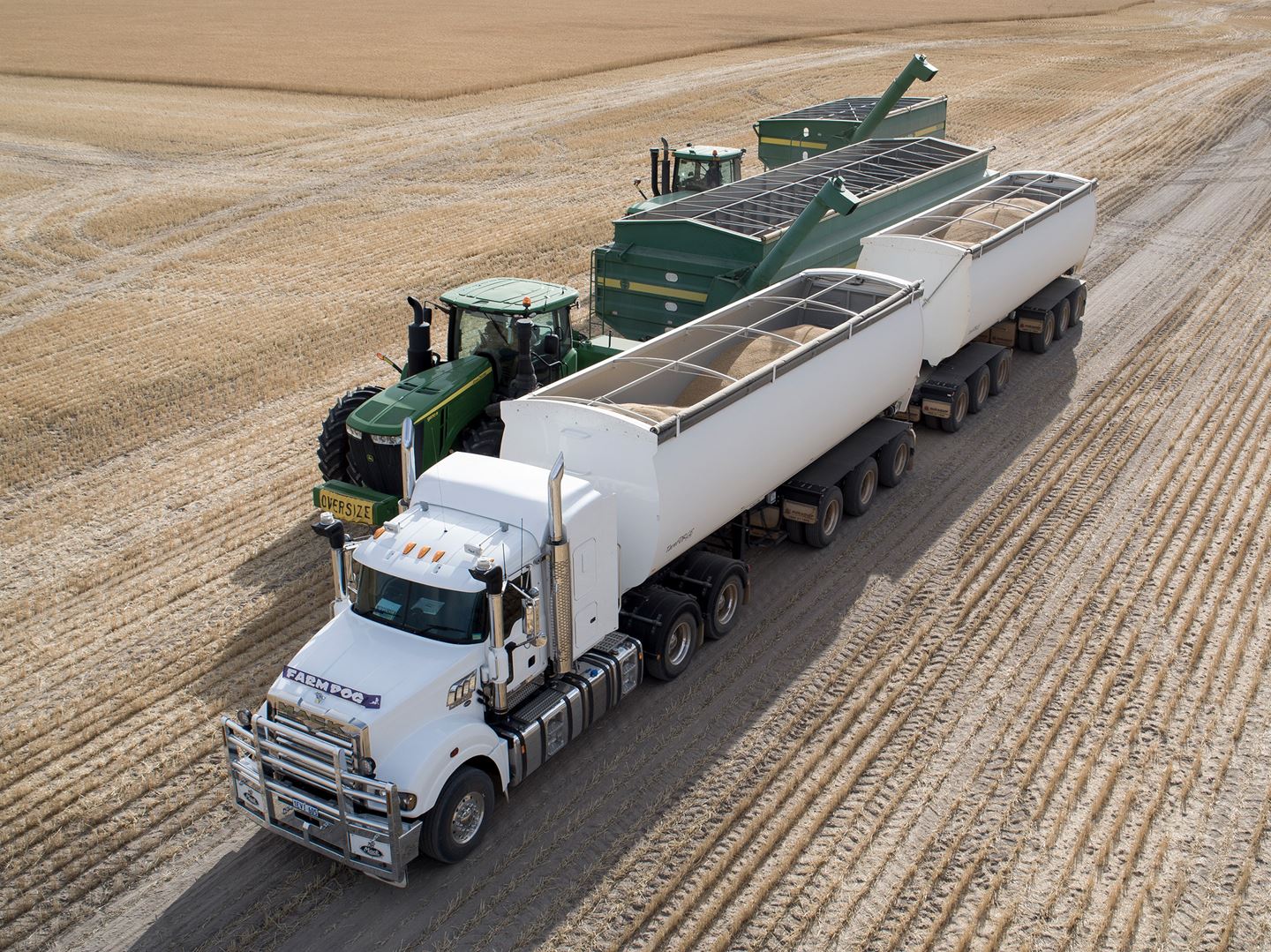
What is the HMMS?
The Harvest Mass Management Scheme (HMMS) is designed to control unintentional overloads occurring when loading out of a paddock.
This is not a concessional loading scheme – a Transport Operator must ensure every effort is made to conform to the statutory mass requirements applicable to the vehicle.
This scheme provides a tolerance above the standard vehicle limits during the harvest period only to allow for a margin of error. It provides an Extra Mass Tolerance (EMT) of up to 10 per cent of the vehicle’s overall Vehicle Regulation Limit (VRL), capped at 10 tonnes. There is a limit of five strikes across all approved receivers for noncompliance before the vehicle loses its tolerance entitlement. Main Roads may suspend vehicles for the next harvest if they are consistently at the upper end of the tolerance limit.
To participate in the HMMS, your vehicle must be registered with CBH, and you must carry a copy of the valid Main Roads HMMS order and complete a CDF (Carter’s Delivery Form).
All grain receivers and transporters must comply with the HMMS Business Rules, which can be accessed on the Main Roads WA website.
Accredited Mass Management Scheme
The Accredited Mass Management Scheme (AMMS) is managed under permit by Main Roads for transporters who can demonstrate appropriate loading control methods relevant to the vehicle and axle mass. This scheme provides additional mass on the defined AMMS network (see below). There is no tolerance over the maximum calculated permitted mass at the time of delivery based on the ‘last mile’ site access and the relevant AMMS level. Main Roads requires that all AMMS breaches are reported.
Restricted Access Vehicle network
The Restricted Access Vehicle (RAV) network determines the heavy vehicle combination that is permitted to travel on Western Australian roads set by Main Roads and local governments. This includes ‘last mile’ access to CBH sites and is subject to change without notice. It is your or the transporter's responsibility to check that their full route, or journey, complies with RAV ratings. A RAV Network Breach letter will be issued at the weighbridge when a combination breaches dimensions (length/axle groups).
AMMS Network
Similar to the RAV Network, there are three levels of approved concessional mass limits available, dependent on the AMMS network level selected. A list of approved Concessional Networks is available on the Main Roads HVS Network Map.
Breaches and forfeits
Overloaded vehicles will have a breach recorded and be provided with a Mass Overload Breach letter at the weighbridge. This will occur regardless of the remedy option selected.
Drivers will have two remedy options available:
- Responsibly correct the load off CBH premises and re-present for delivery. This means that grain must not be dumped on main roads or in parking bays. Incidences of dumping will be investigated, and Main Roads has the power to issue fines to the Transport Operator.
- Forfeit the amount of grain in excess of the scheme mass allowance
To forfeit overloaded grain, you or your representative must accept the forfeiture in the CDF app or sign the forfeiture section of the CDF paper form at the point of delivery. Through the Chain of Responsibility, it is the driver of the truck, regardless of who owns the grain, who has the option to forfeit overloaded grain or take the vehicle off-site. Forfeited grain will be held in the HMMS until the end of harvest. It will then be sold, and the proceeds donated to a nominated charity.
Calculating VRLs
A VRL calculator is available on LoadNet, for Growers under Business Details > Vehicles and for Transporters under Truck Registration
-
Contact Main RoadsVisit Main Roads for the HMMS rules
Main Roads WA heavy vehicles
Heavy Vehicle Help Desk
138 486
Check HVS network access and plan your journey through the
HVS Network Map
Additional information
-
Harvest check weighing at CBH receival sites
Weighbridges located at CBH receival sites are not registered public weighbridges and cannot be used for random check weighing of vehicles. CBH weighbridges have been trade certified for the following purposes only:
- Weighing and recording of vehicles that are delivering grain to that site
- Weighing and recording of vehicles that have been remote sampled to deliver grain to another CBH site
- Weighing of vehicles that are moving grain from CBH site to another site or end-user
Check weighing of any vehicle for any other purposes not listed here is therefore not permitted by CBH whilst a site is open for harvest deliveries and operating within the obligations of the Harvest Mass Management Scheme (HMMS), unless pre-arranged with the local Area Manager.
Vehicles that are observed using CBH weighbridges during the harvest period for any other purpose will be recorded.
Related pages
-
 Deliver a loadRead more about Deliver a load
 -
 CDF appRead more about CDF app
 -
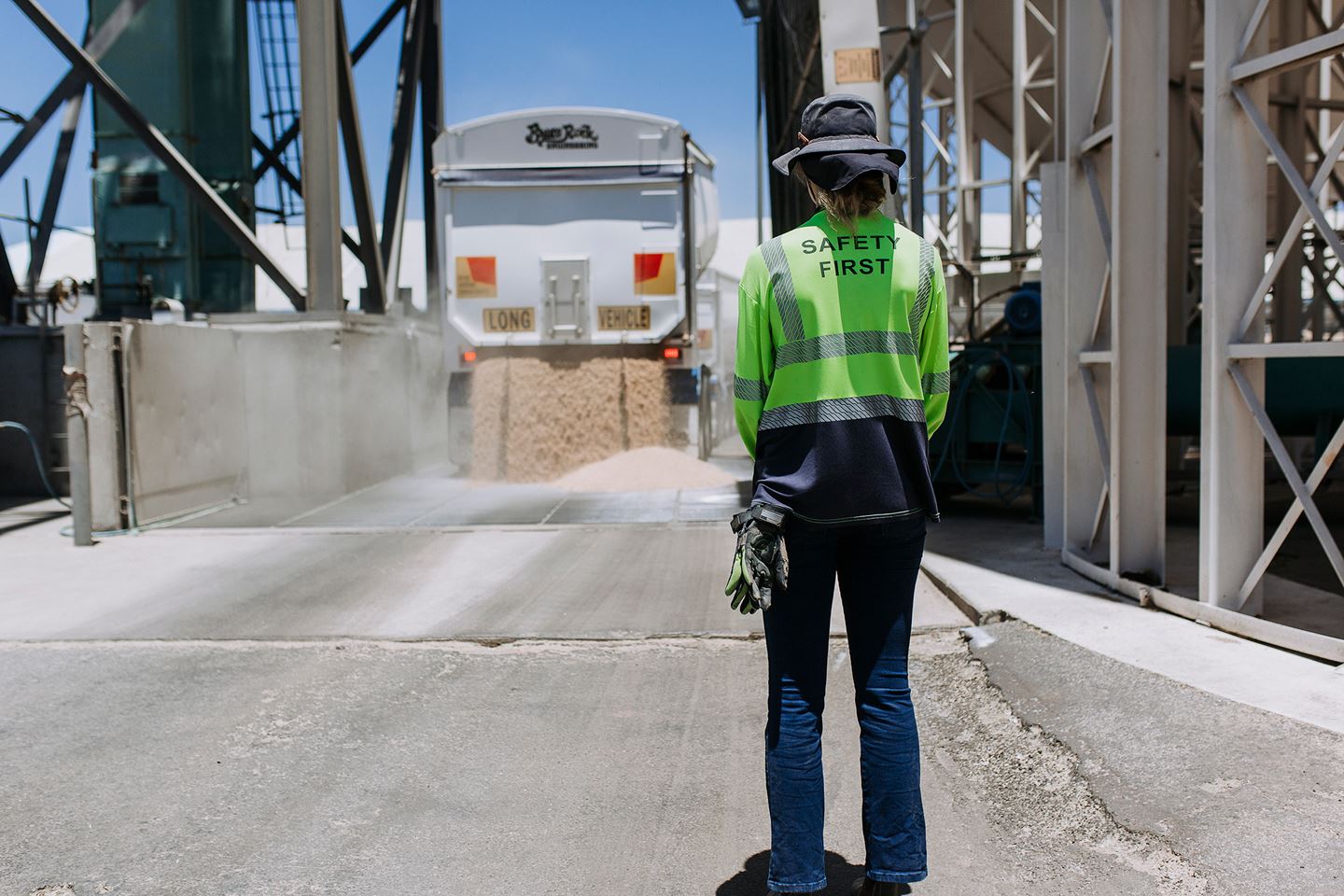 Safety on siteRead more about Safety on site